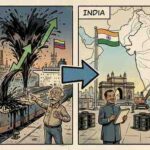
New Delhi, February 2026 — Venezuela has significantly escalated its crude oil exports to India, deploying “super tankers” for the first time since the easing of U.S. sanctions. This strategic shift signals a major revival of the energy corridor between Caracas and New Delhi, as Indian refiners look to diversify their sources away from an over-reliance on Russian crude.
The Rise of the “Sea Giants”
The headline of this maritime surge is the deployment of Very Large Crude Carriers (VLCCs). Known as the “giants of the sea,” these vessels can carry up to 2 million barrels of oil each—nearly double the capacity of the Suezmax tankers previously used for these routes.
Global trading houses like Vitol and Trafigura have already secured several VLCCs, including the Nisos Kithnos and the Arasa, for March loading slots at Venezuela’s Jose terminal. Additionally, the super tanker Olympic Lion is expected to arrive later this month, further cementing this high-volume supply chain.
A Strategic Pivot for Indian Refiners
For India, the world’s third-largest oil consumer, the return of Venezuelan heavy crude is a calculated move to secure discounted energy.
- Reliance Industries has already purchased a 2-million-barrel cargo and is reportedly seeking direct long-term deals with Venezuela’s state oil firm, PDVSA.
- State-run giants such as Indian Oil Corporation (IOC), Bharat Petroleum (BPCL), and HPCL-Mittal Energy have also been linked to recent purchases, signaling a broad industry-wide shift.
Breaking the Sanction Bottleneck
The trade rebound follows a diplomatic thaw between Caracas and Washington that partially reopened trade channels. Before 2019, India was one of Venezuela’s most vital customers. With exports jumping from 500,000 barrels per day in December to roughly 800,000 in January, the easing of sanctions has effectively allowed Venezuela to monetize its vast reserves once again.
Shifting Global Supply Lines
The reactivation of this trade route comes at a time of high volatility in global energy markets. By securing these mega-cargoes, India is not only lowering its procurement costs but also insulating itself from the fluctuations of Middle Eastern and Russian supplies.
Bottom Line
Venezuela’s oil is no longer just trickling back into the market; it is sailing in bulk. The deployment of VLCCs marks the end of the “sanction-era” drought and the beginning of a renewed energy axis. As these tankers cross the Arabian Sea, they carry more than just crude—they represent a significant realignment of India’s energy security strategy.