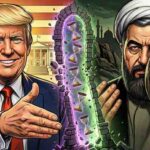
Washington D.C. / Islamabad, March 2026 — In a move that has sent shockwaves through the global diplomatic community, U.S. President Donald Trump has reportedly dispatched a high-stakes 15-point proposal to Tehran. The plan, aimed at ending the ongoing war in the Middle East, was delivered via Pakistan, marking a dramatic shift in how Washington handles its most volatile adversary.
The “Pakistan Channel”: A Strategic Intermediary
The choice of Pakistan as a messenger is no accident. Amidst rising tensions, the Trump administration has utilized Islamabad’s unique position as a neighbor to Iran with deepening ties to the U.S. military leadership. By using Pakistan as a “back-channel,” the U.S. avoids the political sensitivity of direct talks while leveraging regional influence to ensure the message reaches the highest levels of the Iranian regime.
Nuclear Dismantlement: The Non-Negotiable Core
At the heart of the 15-point plan is a rigorous demand for the total cessation of Iran’s nuclear program. According to the proposal, Iran must:
- Abolish Capabilities: Permanently dismantle all existing nuclear infrastructure.
- No Enrichment: Cease all uranium enrichment on Iranian soil, requiring that any necessary fuel be processed externally.
- Surrender Stockpiles: Hand over approximately 450kg of 60% enriched uranium to the IAEA immediately.
- Total Transparency: Grant the UN’s nuclear watchdog full, unrestricted access to all facilities, including the Fordow and Natanz sites.
The “Hormuz Gift” and the Oil Market Ripple
President Trump has already claimed a significant preliminary victory, citing a “big gift” from Iran regarding the Strait of Hormuz. With global oil prices previously surging past $110 per barrel due to threats of a blockade, the proposal demands that the Strait remain an open, safe passage for global trade. Following news of a potential 30-day ceasefire linked to these negotiations, market volatility eased, with crude prices dipping back toward the $100 mark.
Cutting the “Spider’s Web” of Proxies
A major pillar of the U.S. strategy involves isolating Iran from its regional allies. The plan insists that Tehran abandon its “Axis of Resistance,” cutting off all funding and direction to groups like Hezbollah in Lebanon, the Houthis in Yemen, and various militias in Iraq. For the U.S. and Israel, ending these proxy wars is a prerequisite for any long-term peace.
The “Carrot”: Economic Reintegration
In return for these massive concessions, the U.S. is offering a “Carrot and Stick” incentive package. If Iran complies, the plan suggests:
- Sanctions Relief: A gradual lifting of crippling economic sanctions.
- Banking Access: Re-entry into the global SWIFT payment system.
- Infrastructure Investment: U.S.-backed investment in Iran’s civilian energy and infrastructure to compensate for war damages.
A Hard Sell for Tehran
Despite the potential for economic relief, many analysts remain skeptical. For Iran, the nuclear program and regional proxies are viewed as essential tools of national sovereignty and survival. Critics suggest the conditions are “unrealistically harsh,” and with the memory of the 2018 withdrawal from the JCPOA still fresh, the trust gap between Tehran and Trump remains a canyon.
Bottom Line The 15-point plan is a classic Trump-era “Maximum Pressure” maneuver: a blend of military threat and the promise of a “grand deal.” While it offers a potential exit ramp from a conflict that could become a “second Vietnam” for the U.S., it remains to be seen if Iran will trade its “crown jewels” for the hope of economic recovery.