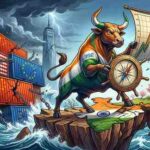
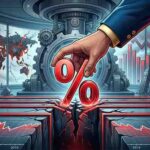
Washington D.C., February 2026 — In a swift and defiant response to a major judicial defeat, President Donald Trump has escalated his global trade offensive. Less than 24 hours after the U.S. Supreme Court struck down his initial tariff regime, the President has hiked global import duties to 15%, signaling an era of heightened economic friction.
The Judicial Blow and the Pivot
The crisis began when the Supreme Court ruled that the President overstepped his authority by using the International Emergency Economic Powers Act (IEEPA) of 1977 to impose broad tariffs. The court clarified that the power to levy such taxes rests solely with Congress.
This ruling created a massive financial headache for the White House: the government now faces potential claims to refund between $30 billion and $170 billion to U.S. importers who had been paying these “illegal” duties for over a year.
The 15% Counter-Strike
Refusing to retreat, the President pivoted to a different legal engine: Section 122 of the Trade Act of 1974. While his administration initially proposed a 10% surcharge, they quickly increased it to the maximum allowable limit of 15%.
This move is a strategic attempt to “buy time.” Under this specific law, the President can impose these duties for up to 150 days (approximately five months) without Congressional approval. The justification used is a “fundamental international payment problem,” though critics argue this is a legal stretch that will likely face its own day in court.
Why Not Go Through Congress?
A major question remains: why does Trump not simply pass a tariff bill through the U.S. legislature? The answer lies in a razor-thin majority.
- The Numbers: The Republican party holds exactly 218 seats in the House and 53 in the Senate.
- The Risk: Unlike India, the U.S. has no “Anti-Defection Law.” Lawmakers can vote against their party’s leader without losing their seats.
- The Dissent: Several Republicans, wary of the rising cost of living for their constituents, are reportedly unwilling to back a permanent tariff hike, forcing the President to rely on executive maneuvers.
The “Section 301” Threat: The Long Game
The 150-day window is merely the first phase. The U.S. Trade Representative (USTR) is now launching massive investigations under Section 301 against major trading partners, including India, China, and the EU.
These investigations allow the President to impose tariffs of 500% or even 1000% if he finds that a country is practicing “unfair trade,” such as high domestic tariffs or pharmaceutical pricing disputes. This effectively allows the administration to bypass the Supreme Court’s limitations by framing trade as a series of specific legal disputes rather than a general emergency.
Impact on Global Partners
The global community, including India, is now caught in a “patchwork” of legal uncertainty. While previous broad tariffs are technically void, the new 15% surcharge—combined with existing duties on steel and tech—means supply chains remain heavily disrupted. The Indian government has stated it is “studying” the legal implications but has yet to launch a retaliatory strike, preferring to stay in negotiation mode.
Bottom Line
The era of predictable trade is over. By circumventing the Supreme Court with a “Section 122” stopgap and a “Section 301” investigation, President Trump has shown that while his legal engines may change, the goal remains the same: using the U.S. market as a weapon. For global exporters, the “Tariff King” has replaced his broken sword with a larger, more volatile blade.