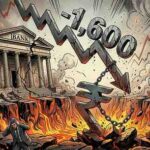
New Delhi, March 2026 — India’s middle class, long considered the backbone of the nation’s economy, is facing an unprecedented identity crisis. While national GDP figures paint a picture of a “global bright spot,” a deeper look into the lives of white-collar professionals reveals a “silent panic” as they transform into what economists now call the “Working Poor.”
The Aspiration Trap: Running to Stand Still
For decades, the Indian middle class followed a social contract: a degree equals dignity and financial security. Today, that contract is broken. Between 2013 and 2024, India’s real income growth averaged a stagnant 0.4% annually, while the cost of basic needs and middle-class aspirations rose by 8% per year.
This creates an “Aspiration Trap.” Professionals are not just struggling to get ahead; they are running as fast as they can just to stay in the same place. The gap between stagnant wages and soaring inflation is being filled not by savings, but by a relentless cycle of debt.
The Debt Bubble: From Assets to Survival
The nature of borrowing in India has undergone a predatory shift. Historically, debt was used to build assets like homes or gold. Current data, however, indicates that 42.9% of household debt is now being used for survival:
- Day-to-day expenses: Groceries and rent.
- Emergency costs: Private healthcare bills.
- Education: Private school fees necessitated by a struggling public system.
The average Indian now carries a debt of ₹4,80,000, creating a “financial noose” where new generations are born into an economy already mortgaged to EMIs.
Credential Inflation and the AI Threat
The “Salary-Man Era” is effectively over. India is currently witnessing a phase of Human Capital Devaluation, where PhD and Post-Graduate holders are seen applying for clerical positions. This “Credential Inflation” means that while young professionals have more degrees than ever, their market value is plummeting.
Compounding this is the rise of Artificial Intelligence. With AI now generating over 25% of code at companies like Google, the traditional “white-collar” jobs that built the middle class are being hollowed out. The education system, designed for an industrial age of “clerks,” is failing to prepare youth for an information age where machines are cheaper than human intelligence.
The ‘Sandwich’ Generation: Over-Taxed and Under-Served
The middle class finds itself in a “Squeeze Play.” They are too “rich” for the government’s welfare subsidies and too “poor” to ignore the crushing weight of taxes. They pay:
- Direct Taxes: Income tax on stagnant wages.
- Indirect Taxes: GST on every consumption point.
- Hidden Taxes: The high cost of private services (education and health) that the state fails to provide.
Caught between a government that views them as a revenue source and a political landscape that doesn’t see them as a decisive vote bank, the middle class has become an economic sandwich—squeezed from both sides.
A Civilizational Risk
Perhaps most concerning is the collapse of the Indian habit of saving. Household net savings have plummeted to 5.3%, a record low. Since savings are the primary driver of future investment, this decline represents a civilizational risk to India’s long-term growth.
Bottom Line
The dream of a “Viksit Bharat” (Developed India) by 2047 cannot be built on the backs of a generation drowning in EMI payments. If the middle class continues to be treated as an “ATM for the state” rather than a partner in growth, the shining GDP numbers will remain an illusion for those who actually drive the economy. Development must be measured not just by the height of skyscrapers, but by the financial dignity of the people living inside them.