Mumbai, February 20, 2026 — In a move that has sent shockwaves through the state’s socio-political landscape, the Maharashtra government has officially revoked the 5% reservation previously granted to the Muslim community. While the state calls it a “technical cleanup,” critics view it as a systemic withdrawal from the principles of social justice.
A Quota Built on Backwardness, Not Religion
The 5% reservation was never a “religious” handout. Established in 2014 under the Special Backward Category-A (SBCA), it was designed to target specific castes within the Muslim community—such as the Qureshi, Ansari, and Nadaf—who were identified as socially and educationally marginalized.
The decision was backed by extensive data, including the Sachar Committee Report, which noted that in several Indian states, Muslim representation in elite services like the IAS and IPS remains below 2.5%—a figure lower than that of many SC/ST groups.
The Legal Loophole: An Ordinance That Never Became Law
The government’s primary justification for scrapping the quota is procedural. The reservation was introduced via an ordinance in 2014. Under Indian law, an ordinance must be ratified by the state legislature within six weeks of a new session or it becomes “void”.
For ten years, successive governments failed to present or pass this ordinance in the assembly. The current administration argues that they are simply “cleaning the files” by officially closing a provision that had already become legally non-existent due to legislative inaction.
The “Double Jeopardy” of Muslim Dalits
The revocation highlights a deeper crisis of “double deprivation” for the community. Under Article 341, Scheduled Caste (SC) status is restricted to Hindus, Sikhs, and Buddhists. Muslim and Christian Dalits are excluded from these constitutional protections, despite sharing identical histories of caste-based oppression.
By scrapping the SBCA category, the state has removed one of the few tailored avenues these “excluded Dalits” had for social mobility in education and employment.
The Immediate Fallout: A Generation Left Behind
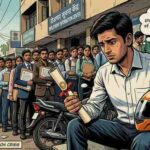
The impact of this “administrative note” is far from technical for the students on the ground:
- Admission Crisis: New SBCA certificates will no longer be issued, and existing ones will not be verified for the current academic cycle.
- Institutional Barrier: Students who relied on this 5% window for medical and engineering seats now find those doors abruptly closed.
- National Signal: This sets a precedent for other states like Kerala and Karnataka, which currently maintain OBC-based classifications for backward Muslim communities.
Bottom Line
The era of the SBCA quota in Maharashtra ended not in a courtroom, but in a filing cabinet. By allowing a decade to pass without converting the ordinance into law, the state has used procedural neglect to dismantle a tool of social mobility. For the government, it is a “constitutional cleanup”; for thousands of students, it is the loss of a level playing field.