Preserving Heritage Amid Modern Transformations
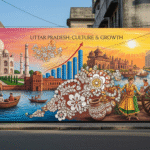
Uttar Pradesh, a state rich in cultural heritage and history, is at a crossroads where its efforts to embrace modernization must be carefully balanced with preserving its traditions. Through targeted cultural policies, the state government seeks to honor its legacy while promoting innovation and development. This dynamic tension between tradition and modernity defines the cultural landscape of Uttar Pradesh today.
Key Government Policies and Initiatives
1. Comprehensive Cultural Policy Draft
The Uttar Pradesh government is drafting a comprehensive cultural policy to preserve and promote the state’s extensive heritage. This initiative focuses on restoring historical sites, revitalizing traditional art forms, and increasing cultural awareness among citizens. The policy seeks to position Uttar Pradesh as a global cultural destination while maintaining its historical integrity. (Uttar Pradesh Directorate of Culture)
2. Promotion of Traditional Arts through ODOP
The One District, One Product (ODOP) scheme has emerged as a cornerstone of the state’s cultural preservation efforts. By identifying and promoting traditional crafts such as Banarasi silk in Varanasi and brassware in Moradabad, this program supports artisans, enhances economic growth, and preserves cultural knowledge for future generations. (UP Government’s ODOP Dashboard)
3. Heritage Site Restoration and Tourism Development
Under the Heritage Arc Program, the government has invested heavily in restoring iconic sites such as the Taj Mahal, Agra Fort, and Varanasi ghats. Simultaneously, cultural tourism is being promoted through programs like the Prasad Scheme (Pilgrimage Rejuvenation and Spiritual Augmentation Drive), which integrates modern infrastructure with the preservation of sacred and historical locations. (Ministry of Tourism)
4. Namami Gange Program for Cultural and Environmental Revival
As part of the national Namami Gange initiative, Uttar Pradesh has taken significant steps to rejuvenate the Ganga River, which holds immense cultural and spiritual significance. Along with cleaning the river, the program emphasizes preserving rituals and festivals linked to the Ganga, ensuring the continuation of age-old traditions. (National Mission for Clean Ganga)
5. Support for Cultural Festivals
The state government actively supports annual events such as the Kumbh Mela, Varanasi Mahotsav, and Taj Literature Festival. These festivals celebrate Uttar Pradesh’s cultural richness while integrating modern organizational practices to attract global participation. (Department of Tourism, Uttar Pradesh)
Balancing the Old and the New
Preserving Traditional Practices
Uttar Pradesh’s policies reflect a strong commitment to safeguarding traditional art forms and rituals. For instance, through the ODOP scheme, artisans receive training and financial aid to preserve the craftsmanship that defines the state’s cultural identity.
Integrating Modern Approaches
While rooted in tradition, these policies also leverage modernity. Heritage sites are being equipped with amenities such as digital ticketing, online guides, and eco-friendly infrastructure, ensuring cultural preservation is accessible to contemporary audiences.
Economic Integration
By tying culture to economic progress, such as promoting cultural tourism and artisan-led industries, the government aligns tradition with the state’s developmental goals. This approach ensures that cultural preservation generates employment and economic upliftment.
Challenges in Policy Execution
- Resource Allocation: Ensuring sufficient funds for both cultural preservation and modernization projects remains a challenge.
- Equity in Representation: Policies must ensure that smaller, lesser-known cultural traditions and communities are not overshadowed by larger, more prominent ones.
- Sustainability: Modern development projects linked to cultural sites must balance infrastructure needs with the ecological and historical integrity of the locations.
Conclusion
Uttar Pradesh’s cultural policies reflect an intricate dance between honoring its past and embracing the future. Through initiatives like the ODOP scheme, heritage site restoration, and the Namami Gange program, the state aims to preserve its rich traditions while integrating them with modern development.
The challenge lies in ensuring that these efforts remain inclusive, sustainable, and respectful of the state’s diverse heritage. If executed thoughtfully, Uttar Pradesh can emerge as a model for other regions, demonstrating that tradition and modernity can coexist and thrive together.