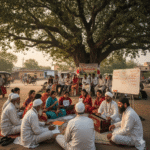
Uniting Education and Opportunity: How Saharanpur’s Expanding School Sector Addresses Religious and Socio-Economic Needs
Saharanpur, 2025 — In a city celebrated for its cultural diversity and rich heritage, Saharanpur is undergoing an educational transformation. New affordable schools like Unity Academy, Green Valley Public School, and Future Scholars Academy are playing a vital role in bridging socio-economic and religious divides, offering quality education to a broad spectrum of the city’s population. These schools, supported by government initiatives, are redefining education in one of Uttar Pradesh’s most dynamic regions.
A City of Diversity and Opportunity
Saharanpur is home to a religiously diverse population, with approximately 55% Muslim, 40% Hindu, and smaller Sikh and Christian communities, according to the 2021 Census. This multicultural demographic has historically shaped the city’s identity, but also presented challenges in ensuring equal access to education.
The city’s socio-economic composition further underscores the need for accessible schools. With a significant proportion of its residents engaged in agriculture, small-scale industries, and woodcraft, the average family income remains modest. Recent government data highlights that nearly 30% of Saharanpur’s population lives below the poverty line, making affordable education a critical factor for societal upliftment.
Affordable Schools Meeting Diverse Needs
New schools like Unity Academy are specifically designed to cater to Saharanpur’s varied demographic. By offering low-cost, inclusive education, these institutions ensure that students from all religious and socio-economic backgrounds have equal opportunities to thrive. Programs include Urdu and Sanskrit language studies, promoting linguistic and cultural inclusivity while emphasizing the importance of co-existence in a diverse community.
Green Valley Public School focuses on providing scholarships to children from economically weaker sections, especially in minority-dominated neighborhoods. This initiative, supported by government grants under the Sarva Shiksha Abhiyan program, ensures that quality education is not a privilege but a right.
Government-Driven Educational Reform
The Uttar Pradesh government has been instrumental in supporting the growth of affordable schools in Saharanpur. Policies such as subsidized land allocations for new schools, grants for infrastructure development, and teacher training programs have encouraged private institutions to establish affordable options in underserved areas.
Under the National Education Policy 2020, schools are integrating regional diversity into their curricula. This has been particularly impactful in Saharanpur, where new schools actively incorporate lessons on communal harmony, environmental awareness, and digital literacy to prepare students for future challenges.
Balancing Tradition with Modernity
While Saharanpur’s older institutions often emphasized rote learning and traditional methods, new schools like Future Scholars Academy are embracing modern teaching practices. Smart classrooms, digital labs, and extracurricular programs are giving students access to a more engaging and holistic education. These advancements are especially important in empowering underprivileged students, who now have access to resources that were previously limited to higher-income families.
Fostering Social Integration
New schools are also fostering integration in a city historically marked by religious tensions. Institutions like Unity Academy emphasize interfaith dialogues and community-building activities, encouraging students and parents to engage across religious and cultural lines. These initiatives are essential in creating a more unified and harmonious society.
Bridging the Socio-Economic Divide
Green Valley Public School and others are setting benchmarks in affordability by adopting sliding-scale tuition fees and offering free resources, including uniforms and books, to students from low-income families. Government data shows a 20% increase in school enrollment rates in Saharanpur’s rural and semi-urban areas since 2022, largely attributed to these schools’ efforts.
The introduction of vocational training programs in these schools further helps bridge the gap. Many students from economically weaker sections are provided with market-relevant skills such as computer literacy and handicraft production, ensuring that education translates directly into livelihood opportunities.
Conclusion
The growth of affordable new schools in Saharanpur is a testament to the city’s commitment to inclusive education. By addressing the unique challenges of its socio-economic and religiously diverse population, institutions like Unity Academy, Green Valley Public School, and Future Scholars Academy are not just educating children but transforming communities.
As government policies continue to support such initiatives, Saharanpur is poised to become a model city for accessible, inclusive, and affordable education in Uttar Pradesh. These schools are breaking barriers, bridging divides, and shaping a brighter future for generations to come.