Sehore, February 2026 — A century-old financial claim has emerged from Madhya Pradesh, bridging India’s colonial past with modern international law. A family from the Sehore district has come forward with documented evidence alleging that the British government owes them a debt dating back to World War I—an amount that, when adjusted for a century of inflation and interest, could now be worth several crores of rupees.
The 1917 Loan: Patriotism or Investment?
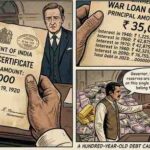
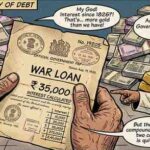
The story begins in 1917, during the height of the Great War. The British colonial administration, facing severe financial strain, launched the “Indian War Loan” scheme to fund military efforts. In response, Seth Jummalal Rutia, a wealthy cloth and grain merchant, lent ₹35,000 to the government.
A preserved document dated June 4, 1917, signed by W.S. Davis, the then-political agent in Bhopal, confirms the subscription. The certificate explicitly notes that the contribution demonstrated Rutia’s “loyalty to the government and empire,” a common sentiment solicited from the Indian elite to stabilize the British war chest.
From Dusty Trunks to Legal Tables
Seth Jummalal passed away in 1937, but the documents survived. They were meticulously preserved by his son, Manak Chand Rutia, until his own death in 2013. Now, his grandson, Vivek Rutia, has brought the matter to light after discovering the papers and a family will during a routine examination of old family records.
The family’s calculation of the debt is staggering:
- Principal: ₹35,000 (1917 value).
- Adjusted Value: Approximately ₹1.85 crore to ₹2 crore based on gold or currency valuation today.
- With Interest: Factoring in compounded interest over 109 years, the total claim could reach dozens of crores.
A Case for International Law
The Rutia family is reportedly preparing to invoke principles of International Law, arguing that sovereign nations are theoretically obligated to honor debts incurred by predecessor administrations or colonial authorities.
While such cases are rare, there is a precedent. As recently as 2015, the UK Treasury redeemed several outstanding “Gilt” bonds, some of which dated back to the 18th century and the Napoleonic Wars. However, legal experts warn that the Rutia claim will require rigorous archival verification to determine if the 1917 certificate qualifies as a legally redeemable instrument or a non-refundable “contribution.”
Beyond the Money: A Historical Reset
For Vivek Rutia, the pursuit is as much about recognition as it is about the money. He stated that the family’s primary aim is to bring this piece of history to the fore, showcasing the significant role Indian merchants played in supporting global administrations during times of crisis.
The case raises broader questions about colonial-era financial accountability. During WWI, many wealthy Indians supported the British, helping manage a war debt that nearly doubled during the conflict.
Bottom Line
The case of the Rutia loan poses a fundamental question: do financial promises made under a colonial crown still carry weight in a post-colonial world? Whether the British government acknowledges the debt or dismisses it as a relic of the past, the discovery has already succeeded in proving that the paper trails of history are never truly erased.