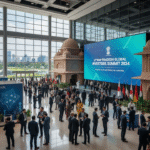
New Delhi, February 2026 — In a major diplomatic breakthrough during the AI Impact Summit in India, Prime Minister Narendra Modi and Brazilian President Luiz Inácio Lula da Silva have signed a comprehensive strategic agreement. The pact focuses on securing supply chains for critical minerals and rare earth elements, aiming to boost bilateral trade to over $20 billion within the next five years.
Securing the “Gold of the 21st Century”
The cornerstone of this visit is a Memorandum of Understanding (MoU) focused on a long-term mineral partnership. Unlike simple supply deals, this agreement outlines joint exploration, mining, processing, and refining operations within Brazil. Brazil is a global mineral powerhouse, home to some of the world’s largest reserves:
- Niobium: Brazil holds a near-monopoly, producing 85-90% of global supply.
- Rare Earths & Lithium: Critical for EVs, wind turbines, and smartphones.
- Nickel: One of the world’s leading producers.
India’s primary objective is to diversify its supply sources and reduce dependence on China, which currently dominates global rare earth processing.
Technology and Digital Public Infrastructure (DPI)
The partnership extends beyond commodities into high-technology sectors. A Digital Cooperation Agreement was signed covering Artificial Intelligence, semiconductors, blockchain, and supercomputing. India plans to share its expertise in Digital Public Infrastructure (DPI), including models like UPI and digital governance platforms, to assist Brazil in modernizing its payment and administrative systems.
Geopolitical Shifts and “De-Dollarization”
The meeting occurs against a backdrop of strained relations between President Lula and the current U.S. administration under Donald Trump. Consequently, President Lula has suggested that India and Brazil explore trading in their local currencies (the Indian Rupee and the Brazilian Real) to bypass the U.S. Dollar. This move aligns with the broader “South-South Partnership” goal of creating a multipolar global economic balance.
Expanding Trade Horizons
Brazil is already India’s largest trading partner in Latin America. Currently, the trade volume stands at $5 billion, which the leaders aim to quadruple by 2031.
- Brazil’s Exports to India: Crude oil, soybeans, sugar, and minerals.
- India’s Exports to Brazil: Pharmaceuticals, machinery, automobiles, chemicals, and IT services.
Bottom Line
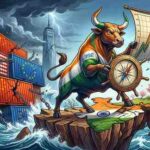
Despite logistical challenges and geographic distance, the India-Brazil alliance represents a significant shift in the global resource landscape. By combining Brazil’s vast mineral reserves with India’s technological prowess and growing market, both nations are positioning themselves as leaders of the Global South, independent of traditional power blocs.