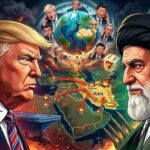
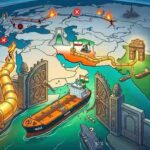
Mau, April 2026 — The “Gate of Tears” is living up to its ancient, somber name. As the conflict involving Iran and Western powers intensifies, the Bab el-Mandeb strait has replaced the Strait of Hormuz as the world’s most dangerous maritime flashpoint, threatening to dismantle the global supply chain overnight.
The Strategic ChokePoint: A Gateway to Crisis
While the world has long obsessed over the Strait of Hormuz, the Bab el-Mandeb is the silent engine of Afro-Eurasian trade. Connecting the Red Sea to the Gulf of Aden, it serves as the mandatory front door to the Suez Canal.
The math of a shutdown is staggering:
- 12% of Global Trade: Everything from smartphones to car parts passes through this narrow corridor.
- Energy Lifeline: Nearly 10% of the world’s seaborne oil and LNG (Liquefied Natural Gas) flows through here daily.
- The Europe-Asia Bridge: It is the primary artery for trade between the world’s biggest manufacturing hubs and its largest consumer markets.
Proxies and the “Secondary Battlefield”
The current crisis isn’t just about conventional navies; it’s about asymmetric warfare. With Iran-backed Houthi rebels controlling Yemen’s coastline, the strait has become a “secondary battlefield.” Equipped with anti-ship missiles, drone swarms, and naval mines, the Houthis act as a proxy trigger that Iran can pull at any moment to retaliate against Western pressure.
The threat isn’t just a physical blockade—it’s the psychology of risk. Shipping companies are risk-averse; the mere rumor of a missile launch causes insurance premiums to skyrocket and crews to refuse the route.
The “Cape of Good Hope” Nightmare
If the Bab el-Mandeb is deemed “unpassable,” the alternative is a return to the 19th century. Ships must divert around the southern tip of Africa via the Cape of Good Hope.
- Time & Cost: This adds 10 to 15 days to every journey.
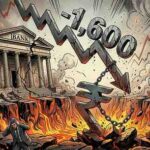
- Inflationary Shock: Higher fuel consumption and logistics delays will lead to a “freight cost explosion” similar to the COVID-era supply chain collapse.
- Port Chaos: Global schedules will be thrown into disarray, causing massive congestion at ports from Singapore to Rotterdam.
India in the Crosshairs
For India, the stakes are existential. As a nation that imports 85% of its crude oil, a disruption here means an immediate spike in petrol and diesel prices at home. Beyond energy, India’s “Export Dream” faces a wall. Products like textiles, engineering goods, and pharmaceuticals—already operating on thin margins—cannot absorb the 20–30% increase in shipping costs that a detour around Africa would demand.
Bottom Line
The era of seamless, cheap global shipping is under siege. The Bab el-Mandeb is no longer just a geographical coordinate; it is a geopolitical lever. If this “Gate” stays closed, the world won’t just see a delay in deliveries—it will face a global economic heart attack.