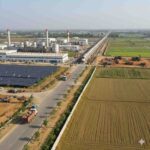
Shenzhen, April 2026 — A massive fire tore through a section of BYD’s primary manufacturing hub in Shenzhen early Tuesday morning. While viral footage of billowing black smoke triggered immediate concerns over the safety of the world’s largest electric vehicle (EV) maker, the company has worked quickly to contain both the flames and the potential fallout to its global supply chain.
What appeared to be a catastrophic hit to production was later clarified by officials as an isolated incident, though it reignites a heated debate over EV safety standards.
Midnight Alarm at Pingshan
The fire erupted at approximately 3:00 a.m. on April 14th within the Pingshan facility, one of BYD’s most critical industrial complexes. By dawn, social media was flooded with videos of the blaze, leading to widespread speculation that production lines for the company’s newest models had been destroyed.
BYD responded within hours, clarifying that the fire was confined to a three-dimensional parking garage. Crucially, the structure was not used for active manufacturing but was a storage site for “experimental vehicles” and “scrapped units” intended for disposal or internal testing.
Production Lines Escape Damage
Despite the intensity of the smoke seen in viral clips, BYD has confirmed that the core assembly and delivery facilities remain untouched.
- Operational Status: No damage was reported to production machinery or the main assembly floor.
- Casualties: Firefighters fully extinguished the blaze by morning; no injuries or deaths were reported.
- Logistics: The company maintains that there has been no significant disruption to its delivery schedules or manufacturing capacity at the site.
The Safety Debate Re-Ignited
While the factory remains operational, the incident has sparked a fresh wave of skepticism online regarding the inherent risks of high-density EV storage. Critics argue that fires involving experimental or end-of-life battery units are particularly difficult to manage, questioning whether safety protocols are keeping pace with BYD’s rapid scale-up.
This comes at a time when BYD is aggressively expanding its “Megawatt-level” charging network—aiming for 20,000 stations by the end of 2026—technology that allows vehicles to charge from 10% to 70% in just five minutes.
A Resilience Test Amid Slowing Sales
The fire occurs against a backdrop of a cooling EV market. While BYD remains the dominant force in China with a 22.8% retail market share, sales have shown signs of slowing down compared to the record highs of previous years. For investors and consumers, the Pingshan fire is being viewed as a test of the company’s industrial resilience and its ability to manage high-stakes crisis communications in its home territory.
Bottom Line
The Pingshan fire was a visual shock but appears to be a minor operational hurdle. While it didn’t cripple the assembly lines, it serves as a stark reminder of the volatility associated with the next generation of transport. BYD has escaped the flames this time, but the pressure to prove the absolute safety of its facilities and its fleet remains higher than ever.