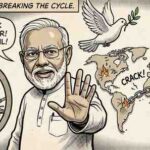
London, April 2026 — Prime Minister Keir Starmer has drawn a hard line in the sand, publicly defying U.S. President Donald Trump’s demands for the United Kingdom to join the military offensive in Iran. The standoff has reached a fever pitch as Washington threatens to dismantle a critical bilateral trade deal as “punishment” for London’s neutrality.
While the U.S. administration ramps up pressure, Starmer’s refusal marks a historic moment of friction in the transatlantic alliance, prioritizing national sovereignty over economic incentives.
The Trade Ultimatum
The diplomatic crisis escalated following a phone call between President Trump and Sky News, during which the U.S. President threatened to “rip up” the U.S.-UK trade agreement. Trump’s message was blunt: join the “offensive” in Iran or lose the economic lifeline promised to post-Brexit Britain.
Critics in Parliament have been quick to condemn the move, comparing the President’s tactics to a “mafia boss running a protection racket.” Despite the looming economic shadow, the Prime Minister remained resolute, stating that the UK would not be coerced into a conflict that does not serve its national interest.
“Not Our War”: Starmer’s Justification
During a heated session at Prime Minister’s Questions (PMQs), Starmer addressed the immense pressure being applied to his government. He stood by his long-held position that the UK will not be “dragged” into the Iran conflict.
“I’m not going to change my mind; I’m not going to yield. It is not in our national interest to join this war, and we will not do so,” Starmer told the House.
The Prime Minister emphasized that while the U.S. remains a key partner, the decision to deploy British forces is a sovereign one that cannot be bartered for trade favors.
A Royal Visit Under Shadow
The timing of the rift is particularly sensitive, as the UK prepares to send the King to the United States to mark the 250th anniversary of U.S. independence. Some Members of Parliament have called for the visit to be reconsidered, fearing the monarch could be “embarrassed” by an unpredictable President.
Starmer, however, defended the visit, arguing that the monarchy represents “long-standing bonds” that transcend any individual leader or temporary political dispute. He framed the relationship as an enduring partnership that must survive the current friction.
The Defense Spending Debate
The internal pressure on Starmer isn’t just coming from Washington. Domestic critics have seized on the “peril” of national security, accusing the government of being too slow to publish its defense investment plan.
- The Record: Starmer highlighted that his government has already increased defense spending to 2.6% of GDP, with a commitment to reach 3.5%.
- The Critique: Opposition leaders argue that “talking about an increase is not the same as giving one,” pointing to a military that is at “the end of its tether” while waiting for a 10-year security blueprint.
Bottom Line
The “Special Relationship” is currently being tested by a clash of wills. By choosing to protect British troops from a foreign war at the risk of a multi-billion pound trade deal, Keir Starmer has signaled that the UK’s foreign policy is no longer for sale. Whether the trade deal survives or is “crushed” as threatened, the masks of diplomatic politeness have officially slipped.