Washington D.C., April 2026 — In a stunning diplomatic pivot, President Donald Trump has announced a two-week ceasefire with Iran, marking a significant de-escalation in a conflict that recently appeared headed toward full-scale war. The deal includes the immediate reopening of the Strait of Hormuz, a critical artery for global energy supplies.
A Strategic Pause in Hostilities
The agreement, described by the President as a “suspension of bombing,” establishes a 14-day window for both nations to finalize a long-term peace treaty. Trump asserted that the U.S. has achieved its primary military objectives, allowing the administration to transition from kinetic operations to high-level diplomacy.
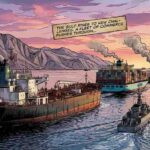
The centerpiece of the truce is the “complete, immediate, and safe opening” of the Strait of Hormuz. Iran has reportedly agreed to allow commercial transit to resume, provided that shipping movements are coordinated with regional military forces to ensure security.
The Framework: 10 Points vs. 15 Points
The breakthrough appears to be a compromise between two distinct diplomatic frameworks. President Trump noted that Iran submitted a 10-point proposal that the U.S. found to be a “workable basis” for negotiation.
On the other side, Iranian officials indicated that their willingness to come to the table was sparked by a U.S. request to discuss a 15-point framework originally drafted by the previous administration. Despite these differing starting points, both sides now claim that the majority of major hurdles have been cleared, leaving only final details for the upcoming summit.
Pakistan: The Neutral Ground
In a significant win for regional diplomacy, the first round of official negotiations is set to take place in Pakistan on April 10th.
This venue was finalized following intensive coordination between President Trump, Pakistan’s Prime Minister Shehbaz Sharif, and Field Marshal Asim Munir. Tehran has publicly thanked Pakistan for its “brotherly” mediation efforts, crediting the nation’s “tireless efforts” for preventing a catastrophic expansion of the war.
The Clock is Ticking
While the 14-day ceasefire provides a temporary reprieve for global markets and regional civilians, the pressure is on to convert this pause into a permanent “Agreement Concerning Long-term Peace”. The upcoming talks in Pakistan will determine if this is a lasting reset or merely a brief intermission in a long-standing rivalry.
Bottom Line The reopening of the world’s most vital oil transit point suggests that, for now, economic pragmatism has triumphed over military escalation. With a two-week clock running, the diplomatic world turns its eyes to Pakistan to see if a formal end to the U.S.-Iran war can be reached.