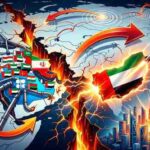
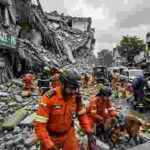
The Persian Gulf, March 2026 — While global markets remains fixated on oil prices and tanker routes, a more “shocking reality” is emerging from the shadows of the U.S.-Israel-Iran standoff. Experts warn that the most critical strategic vulnerability in the region is no longer crude oil, but the civilian infrastructure providing life-sustaining drinking water.
The Mirage of Resource Wealth
For decades, the Persian Gulf has been defined by its immense oil and gas reserves. However, the geographic irony is stark: the region possesses some of the world’s most significant energy wealth but suffers from a near-total lack of natural freshwater.
To bridge this gap, Gulf nations have spent billions since the 1970s constructing a massive network of nearly 450 desalination plants. These facilities, which convert seawater into potable water, are the only reason modern metropolises like Dubai, Kuwait City, and Riyadh can exist.
A Decades-Old Warning Ignored
The shift in strategic focus is not a new concept for intelligence agencies. Declassified CIA assessments from the early 1980s reveal that senior Gulf officials once considered water security even more vital to national well-being than oil exports.
Today, that concern has reached a breaking point. With approximately 100 million people living across the six Gulf Cooperation Council (GCC) countries, the dependency on artificial water production is absolute. In nations like Qatar and the UAE, survival is tied directly to the functional integrity of a handful of coastal plants.
Targeting “Soft” Infrastructure
As military tensions rise, Iran’s strategic options have narrowed. Facing the combined technological might of the U.S. and Israeli “war machine,” Tehran appears to be pivoting toward “soft targets.”
- Recent Precedents: A drone interception in Kuwait recently caused a fire at a water facility, and a power station in Fujairah (UAE)—which services one of the world’s largest desalination hubs—has already been targeted.
- The Iranian Calculus: By threatening water systems, Iran can exert massive pressure on its neighbors without engaging in a direct, high-intensity military confrontation it likely cannot win.
The Irreplaceable Commodity
Under international law, desalination plants are classified as protected civilian infrastructure. However, as the conflict escalates, the “gentleman’s agreement” regarding these facilities is fraying. Analysts suggest that even an accidental strike on a major desalination hub could trigger a humanitarian crisis of unprecedented proportions.
Unlike the oil market, which can rely on global strategic reserves or alternative pipelines during a disruption, there is no “strategic water reserve” capable of sustaining 100 million people for more than a few days.
Bottom Line
The era of viewing Middle Eastern conflict solely through the lens of a “petro-war” is over. In this landscape, oil is a source of wealth, but water is the prerequisite for life. As the standoff continues, the real frontline isn’t at the oil wells—it’s at the desalination intake pipes. If those stop pumping, the region’s economic and social stability collapses overnight.