New Delhi – In a country like India, where faith has long been a cornerstone of personal and collective identity, devotion has the power to unite diverse communities. However, recent trends suggest a paradox: instead of fostering unity, belief systems are increasingly becoming sources of division. As public figures and social movements polarize debates around religion and identity, the question looms large—are we growing more divided in our devotion?
Faith as a Unifier or Divider?
India has historically been a land of pluralism, where different religions have coexisted for centuries. From the syncretic Bhakti and Sufi movements to the Gandhian philosophy of inclusivity, faith has often acted as a bridge across communities. But today, it is frequently weaponized to deepen societal rifts.
- Communal Politics
- Political narratives have increasingly invoked religion as a tool for voter mobilization.
- During the 2023 state elections, a leading politician declared, “Only those who align with the majority faith deserve to lead this nation.” Such rhetoric, while designed to consolidate vote banks, alienates minority communities and erodes trust.
- Religious Vigilantism
- Mob lynchings over accusations of cow slaughter or forced conversions have drawn national and international condemnation. A 2022 report by Human Rights Watch noted a sharp rise in such incidents, with 60% of cases linked to communal tensions.
The Media’s Role in Fostering Divisions
Media, both traditional and digital, has amplified divisions, often prioritizing sensationalism over responsibility.
- Polarizing Headlines
- News outlets frequently publish stories with divisive angles, such as controversies over hijab bans or temple entry restrictions, stoking tensions rather than encouraging dialogue.
- A 2023 analysis by Alt News found that over 40% of communal stories trending on social media were misleading or fabricated.
- Social Media Echo Chambers
- Platforms like Twitter and WhatsApp have become breeding grounds for religious misinformation. Viral messages often take verses or teachings out of context to inflame tempers, further dividing communities.
Devotion in Public Spaces: A Double-Edged Sword
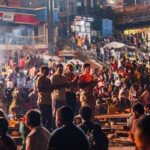
Public expressions of devotion, such as religious festivals and processions, have increasingly become flashpoints for conflict.
- Festivals Turned Political Statements
- Events like Ram Navami and Muharram, once seen as opportunities for spiritual reflection, are now often politicized. Large-scale processions frequently lead to clashes, as opposing groups assert dominance over shared spaces.
- Noise Pollution and Territorial Claims
- The controversy over loudspeakers in places of worship in 2022 highlighted how public expressions of faith can infringe on others’ rights, sparking debates about the balance between devotion and civic responsibility.
Generational Shifts in Belief
The generational divide is also shaping how devotion is practiced and perceived.
- Younger Generations
- Millennials and Gen Z often challenge traditional practices that they perceive as exclusionary or outdated. For example, there has been a growing demand for gender-inclusive spaces in temples and mosques.
- A Pew Research Center study in 2022 found that 53% of urban Indian youth prefer spiritual exploration over organized religion, reflecting a shift towards personal belief systems.
- Older Generations
- Elders, however, see such shifts as a rejection of heritage, deepening generational rifts within families and communities.
The Way Forward: Reclaiming Faith as a Force for Unity
To counter the growing divisions, India must revisit the core values of its spiritual heritage—compassion, inclusivity, and mutual respect.
- Interfaith Initiatives
- Programs that encourage dialogue between different religious communities can help dispel stereotypes and foster understanding. Organizations like the Interfaith Foundation of India are already working towards these goals.
- Media Accountability
- News platforms must prioritize balanced reporting, ensuring that religious stories promote inclusivity rather than division.
- Educational Reforms
- Introducing courses on comparative religion in schools can help younger generations appreciate the shared values across faiths, reducing communal biases.
- Legislative Action
- Stricter laws against hate speech and religious violence must be implemented to hold perpetrators accountable.
Conclusion: Bridging the Divide
Faith has the potential to be one of humanity’s greatest unifiers, yet its misuse risks turning it into a divisive force. India, with its unparalleled diversity, stands at a crossroads—will we allow devotion to deepen divisions, or will we reclaim it as a bridge to understanding and unity?
The answer lies in moving beyond rhetoric and symbolism, fostering a culture where devotion uplifts rather than divides, and ensuring that our beliefs bring us closer together rather than pushing us further apart.